

How to Brew Loose Leaf Tea Properly for a Better Cup
Last Updated: November 19, 2026
Quick Summary
To brew loose leaf tea properly, measure one teaspoon of leaves per 8 ounces of water, heat water to the correct temperature for your tea type, and steep for the right time. Stop short of a rolling boil for green, white, and oolong teas, then remove the leaves when steeping ends.
- Black tea brews at 200-212°F for 3-5 minutes using 1 tsp per 8 oz.
- Green tea needs 160-180°F water and a 2-3 minute steep.
- Without a temperature-controlled kettle, boil water and let it rest two to three minutes for green or white leaves.
- Bitter tea usually means too much heat, too long a steep, or too many leaves.
- Oolong and whole-leaf black teas often give two or three solid infusions, adding about 30 seconds each time.
Table of Contents
- How to Brew Loose Leaf Tea Properly: The Core Steps
- Your Loose Leaf Tea Water Temperature Guide
- Steeping Time for Different Tea Types and the Loose Leaf Tea to Water Ratio
- How to Brew Loose Leaf Tea Without an Infuser
- Troubleshooting Bitter, Weak, or Cloudy Tea
- Re-Steeping Leaves and Multiple Infusions
- Storing Leaves So They Stay Fresh
- Start With a Better Leaf
- Frequently Asked Questions
How to Brew Loose Leaf Tea Properly: The Core Steps
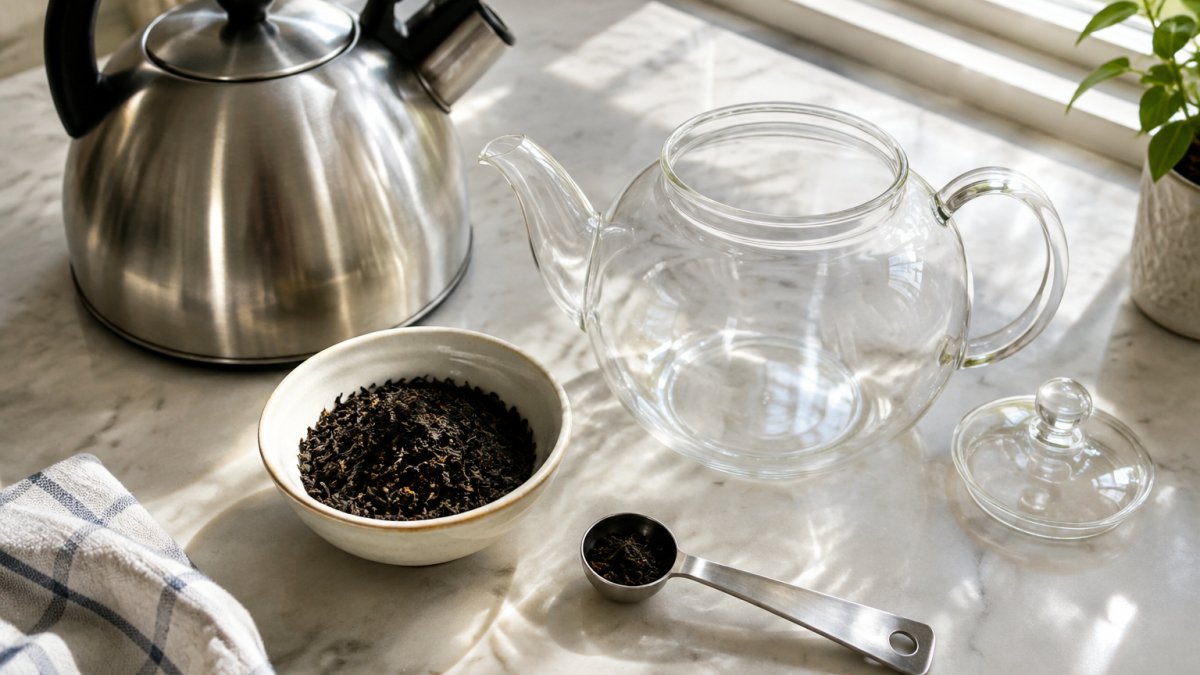
Brewing loose leaf tea properly means measuring the right amount of tea, heating water to the correct temperature, and steeping for the right time (UK Tea & Infusions Association).
- Measure: one teaspoon of loose leaf tea per 8 ounces of water (about 2.5 grams for a 12-ounce mug).
- Heat: stop short of a rolling boil for green, white, and oolong teas.
- Add leaves to your infuser or pot and give them room to expand.
- Pour slowly and evenly so every leaf gets wet.
- Steep, tasting 30 seconds before the timer ends.
- Remove the leaves by lifting the infuser or straining into a second vessel.
- Serve hot or over ice.
Your Loose Leaf Tea Water Temperature Guide
Water temperature is the single biggest lever on flavor: too hot releases harsh tannins, too cool tastes thin and weak.
- Black tea: 200-212°F, right off a rolling boil
- Oolong tea: 185-205°F
- Green tea: 160-180°F
- White tea: 160-185°F
- Herbal tea: 212°F, a full boil
- Matcha: 175°F, whisked rather than steeped
Without a temperature-controlled kettle, boil the water and let it rest two to three minutes before pouring over green or white leaves. Matcha is the fussiest, and our The Deliberate Stop -- Matcha is designed for traditional whisked preparation.
Steeping Time for Different Tea Types and the Loose Leaf Tea to Water Ratio
Steeping time and the tea-to-water ratio work together. Start with one teaspoon of leaves per 8 ounces of water, then adjust to taste.
| Tea Type | Water Temperature | Steep Time | Ratio (per 8 oz) |
|---|---|---|---|
| Black tea | 200-212°F | 3-5 minutes | 1 tsp / 2.5g |
| Green tea | 160-180°F | 2-3 minutes | 1 tsp |
| White tea | 160-185°F | 4-5 minutes | 1 heaping tsp |
| Oolong tea | 185-205°F | 3-4 minutes | 1 tsp |
| Herbal tea | 212°F | 5-7 minutes | 1-2 tsp |
Steep Time
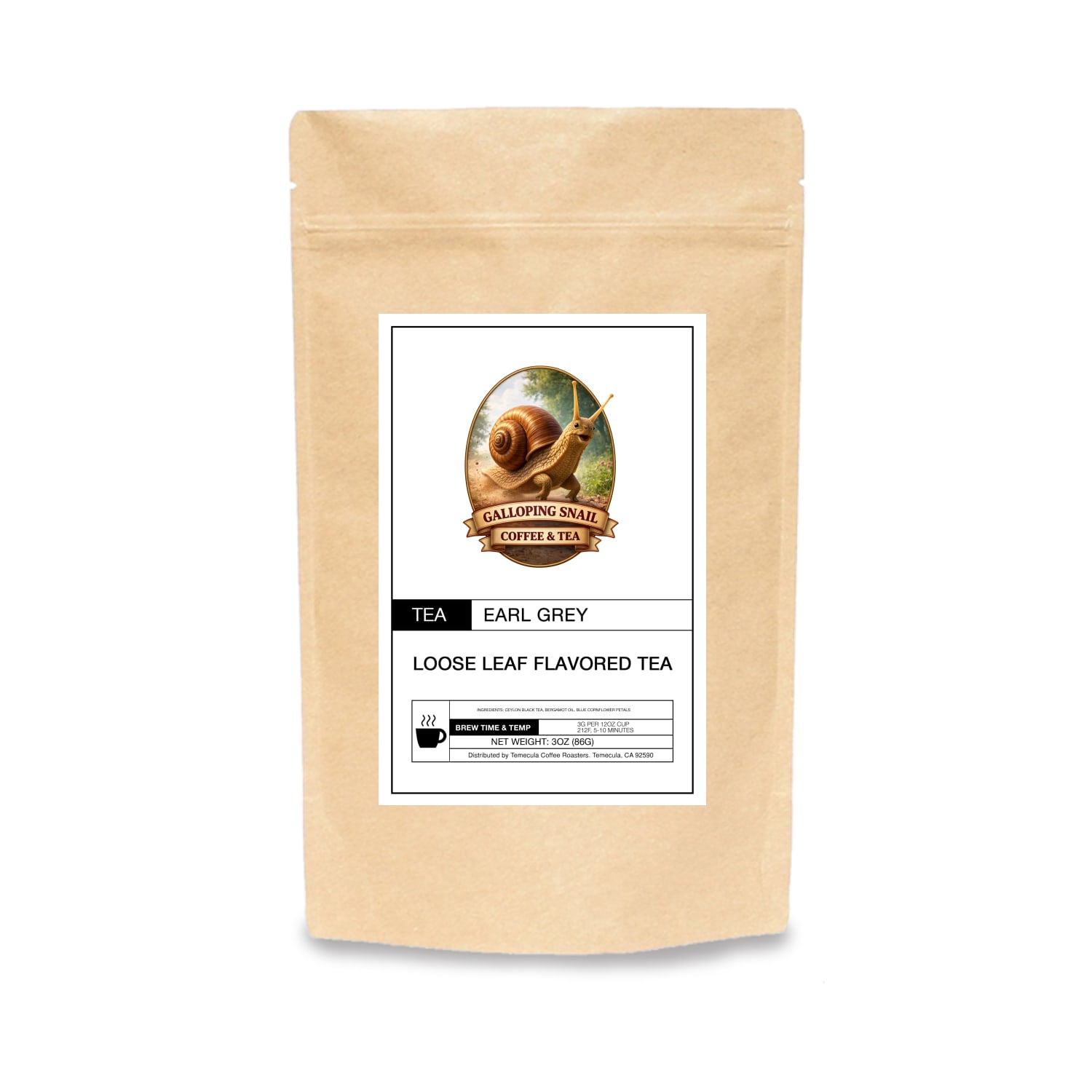
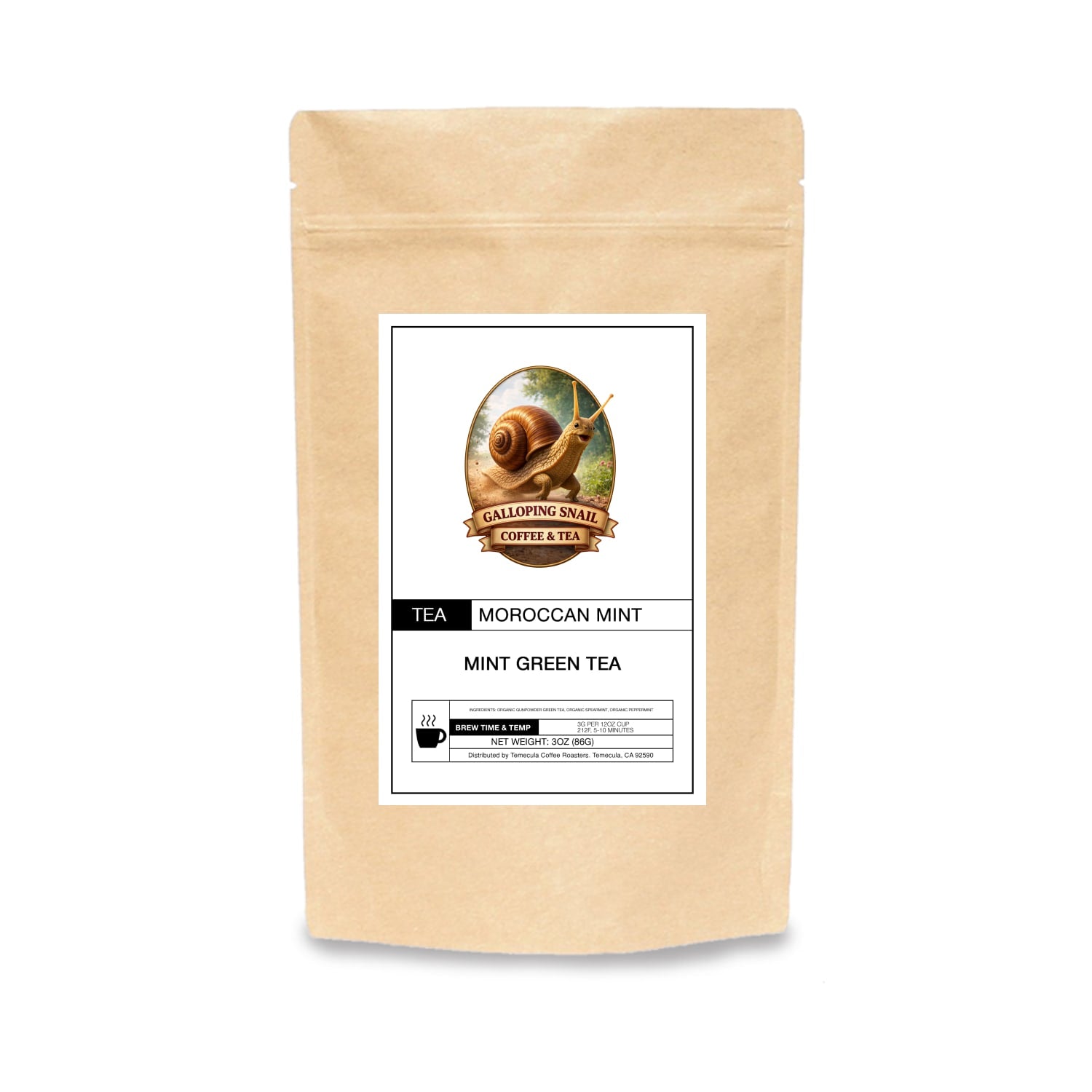
Two blends make good practice grounds. Our The Timeless Road -- Earl Grey Loose Leaf Tea brews at 195°F for 5-10 minutes, and The Road Through Marrakech -- Moroccan Mint Green Tea brews in 2-3 minutes at 175°F and can be served hot or iced.
How to Brew Loose Leaf Tea Without an Infuser
No infuser? A fine-mesh tea strainer or sieve works, and so does a French press: add leaves, pour hot water, steep, then press the plunger down slowly. Or steep the leaves directly in one cup, then pour through a sieve into a second cup.
Troubleshooting Bitter, Weak, or Cloudy Tea
Bitter tea almost always means too much heat, too long a steep, or too many leaves. Pull back on the temperature first, then shorten the time.
Weak tea points the other way: too few leaves, water that never got hot enough, or stale leaves. Cloudy tea usually comes from hard water or squeezing the leaves against the strainer. Do not press them.
Re-Steeping Leaves and Multiple Infusions
Good loose leaf tea can be steeped more than once. Oolong and whole-leaf black teas often give two or three solid infusions; add about 30 seconds to each subsequent steep at the same temperature. Herbal blends and finely broken leaves give up their flavor in the first round.
Storing Leaves So They Stay Fresh
Loose leaf tea is sensitive to air, light, heat, and moisture, and those four factors drive oxidation and flavor loss. Keep leaves in an airtight container, away from the stove and out of direct sun. At Galloping Snail Coffee & Tea, we roast and grind coffee only after you order.
Start With a Better Leaf
The best brewing technique cannot rescue stale leaves. Galloping Snail Coffee & Tea offers small-batch, hand-selected loose leaf tea, delivered straight to your door. Get started with Galloping Snail Coffee & Tea and taste what a properly brewed cup can do.
Frequently Asked Questions
What is the ideal ratio of water to loose leaf tea?
A reliable starting point is 2 to 3 grams of loose leaf tea per 8 ounces of water, which works out to roughly 1 teaspoon of most leaf styles. Broken or fine leaves pack tighter, so use less; whole-leaf oolong and white tea are bulkier, so use a little more by volume. Weigh the leaves once if you can, then eyeball it from there. Adjust up or down after your first cup to match how strong you like it.
Are you supposed to boil water for all types of loose leaf tea?
No. Black tea and most herbal blends can take boiling water, while green, white, and oolong teas are usually brewed at lower temperatures. If you do not own a variable-temperature kettle, boil the water and let it rest in the cup for two to three minutes before pouring over delicate leaves.
How do I brew loose leaf tea if I do not have an infuser?
You have several workable options. Brew the leaves straight in a mug or small pot, then pour through a fine kitchen sieve into a second cup. A French press works well because the plunger strains the leaves cleanly. You can also place leaves in a paper coffee filter, tie it shut, and treat it like a large tea bag. All three methods let you remove the leaves at the right moment, which is what protects the flavor.
